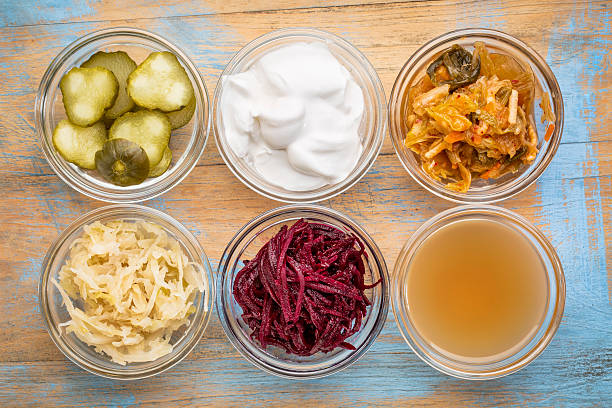
Even though many fermented foods may have only come back into fashion in recent years, they have been part of a traditional human diet for centuries. Some research dates them to appearing in the human diet almost 10,000 years ago.
Their health benefits have been well researched, not just for gut health but for overall wellbeing and longevity.
This article will explore fermented foods, the real science around their health benefits and the best ways to add them into the diet.
What Are Fermented Foods and Why Are They Good for Your Gut?
Foods are fermented by microorganisms such as bacteria and yeast. Instead of the food spoiling, this fermentation process not only preserves the foods but produces beneficial by-products.
Fermentation not only products gut friendly probiotic bacteria but also compounds that nourish the gut and balance the gut microbiome such as:
- Lactic acids
- Organic acids
- Bioactive peptics
The probiotics produced via fermentation don’t actually live in the gut long term, but they are classed as transient organisms. This means that as they travel through the gut they lead to benefits such as:
- Reducing inflammation
- Supporting the growth of benefitable bacteria already in the gut
- Stimulates the production of the guts own anti-microbial compounds to reduce the presence of less beneficial organisms
The fermentation process also increases the availability of nutrients in the food.
This include an increase in:
- Vitamin C
- B-vitamins
- Vitamin K
And a reduction in antinutrients like phytic acid. This allows certain nutrients to be better absorbed.
Such as:
- Iron
- Zinc
- Calcium
Essentially fermented foods:
- Contain gut friendly microorganisms
- More nutrition that the raw food contained before fermentation
- Reducing of antinutrients, leading to better absorption of nutrients
How Do Fermented Foods Support Digestion and Immunity?
In 2021 a landmark study from Stanford Cell explored why a diet high in fermented foods might be beneficial.
They found:
- Microbiome diversity increased significantly
- There was a reduction in 19 markers of inflammation (not seen with a high fibre diet)
- Increase production of short-chain fatty acids
The probiotic bacteria and the lactic acid in fermented foods were also found to help crowd out and compete with less beneficial organisms. This creates a healthier eco-system.
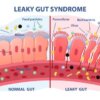
One of the most important aspects is the production of short-chain fatty acids (SCFAs), in particular butyrate. This is also called a post-biotic and is responsible for upwards of 70% of the energy required to keep the cells along the gut lining healthy. Lower levels of butyrate have been associated with poorer gut lining integrity (eg leaky gut).
The immune system was also studied which founds:
- A more balance and diverse microbiome leads to a more regulated immune response
- This also reducing inflammation as the immune system is calmer
- These results were consistent across all participants
Which Fermented Foods Are Easiest to Add to Your Diet?
A range of fermented foods are easily accessible in most shops. The easiest ones to add are the ones that you enjoy the most. However, a variety is also important.
Here is some further information about how to pick the best options.
Yoghurt with Live Cultures
- Fermented milk product which contains specific strains of bacteria.
- Support microbiome diversity.
- Focus on finding products that have live cultures and that do not contain extra sugars or flavourings.
Kefir
- Another fermented milk product that contains a wider range of bacteria and yeast. Eg up to 61 strains of bacteria and yeasts — far more diverse than yoghurt’s typical 2–3 strains.
- Contains SCFAs that support the health of the gut lining and the motility of the colon.
Sauerkraut and Kimchi
- A process that ferments vegetables both to preserve them and to increase health values.
- Sauerkraut has been found via studies to reduce the symptoms of IBS, particularly bloating and discomfort.
- Eating a small amount regularly may be more beneficial than a large amount less often.
Miso and Tempeh
- These are both made from soy products being fermented.
- As well as these containing certain bacteria, the fermentation process leads to increased levels of vitamins such as vitamin K
- Studies have found these can also improve the balance and composition of the gut microbiome.
- Miso should be added at the end of cooking to preserve live cultures; tempeh works well in stir-fries, salads, and grain bowls
Practical Tips for Beginners
- Start slow with small portions. This can be 1–2 tablespoons of sauerkraut, 100ml of kefir.
- It can also be sensible to introduce 1 at a time to identify if there are any reactions or intolerances.
- Store live fermented foods in the fridge — heat destroys the beneficial bacteria
If you are unable to tolerated fermented foods, this is not uncommon, especially in those with IBS. If this is the case, consider seeking guidance from a gut health specialist.
Are Fermented Foods Suitable for People with IBS?
Fermented foods are spoken about as good for gut health, gut what does the research say?
- 2022 study found kimchi significantly reduced bloating and abdominal pain leading to improvements in symptoms in those with IBS
It’s important to note that some peple with IBS may not react well, or that a slow introduction is best. This may be due to:
- How fermented foods interact with the gut microbiome
- Levels of histamine in these foods
Jotting down what you eat alongside any symptoms you notice over a day or two can make it easier to spot patterns and figure out what works best for you
Frequently Asked Questions
Which fermented foods have the most probiotics?
- Kefir leads with up to 61 strains; live-culture yoghurt, and unpasteurised sauerkraut/kimchi also rank highly
How often should you eat fermented foods?
- Daily small servings are more effective that single, high volume servings less often. A Stanford study used 3–6 servings per day, but starting with one to ensure tolerances and sustainability is a practical and sensible approach.
Are store-bought fermented foods still healthy?
- Only if unpasteurised and labelled with live cultures — shelf-stable, vinegar-based, or heat-treated versions offer limited probiotic benefit but may still contain gut lining support compounds such as SCFAs.
Can fermented foods cause stomach discomfort?
- Bloating and gas are common in the first few days; starting with small portions and increasing slowly can help with this. The best approach is starting low and going glow.
Conclusion
Fermented foods have strong evidence supporting their benefits — including greater microbiome diversity and lower inflammatory markers — and are widely available and easy to work into everyday meals, though starting slowly and building up gradually is the safest approach.
While individual tolerance varies, particularly for those with IBS, histamine intolerance, or FODMAP sensitivities, fermented foods work best as part of a broader balanced diet, making them a practical and sustainable addition to any gut health strategy.
References
- Stanford Medicine Fermented-food diet increases microbiome diversity, decreases inflammatory proteins, study finds
- Gut Microbiota for Health Fermented foods and gut health: what science is uncovering
- Frontiers in Nutrition Kefir and Intestinal Microbiota Modulation: Implications in Human Health
- PMC (National Library of Medicine) The Microbiota and Health Promoting Characteristics of the Fermented Beverage Kefir
- PMC (National Library of Medicine) Kimchi improves irritable bowel syndrome: results of a randomized, double-blind placebo-controlled study
- PMC (National Library of Medicine) Fermented Vegetables as a Potential Treatment for Irritable Bowel Syndrome
- Springer Nature / Microbiome The impact of regular sauerkraut consumption on the human gut microbiota: a crossover intervention trial
Last updated
Uploaded by Martin Cohen on 30/03/2026