While antibiotics are an important medicine that saved millions of lives, their use has increased by 66% globally since 2000. This leads to concerns about long-term gut health impacts due to how they interact and impact the gut microbiome.
The microbiome is formed by over 100 trillion microorganisms, which cover over 5,400 prokaryotic species. This created a very complex ecosystem that is central to digestive processes, the immune system and overall health.
While antibiotics kill bacteria responsible for infections, they also target the good bacteria. This can lead to microbiome imbalances, often called dysbiosis. Supporting the gut microbiome after antibiotics isn’t just about increasing numbers but also diversity, metabolic function and the balance.
This guide will talk you through the science-backed strategies for gut recovery following antibiotics.
The Impact of Antibiotics on Gut Health
A single course of antibiotics can have a significant impact on the gut microbiome. For example:
- One course of broad-spectrum antibiotics can reduce the abundance of 30% of the microbiome
- Short-term antibiotics (5-7) can lead to gut bacteria changes that can still be present 2 years after treatment. Some species may not ever return to baseline levels.
- One study found that after antibiotics, 9 common species that were present before treatment remained undetectable after 6 months.
- Changes can involve a reduction in beneficial genera, including Bifidobacterium and butyrate-producing bacteria.
- Changes can also involve increased levels of potentially harmful bacteria. (Eg – Enterobacteriaceae and Enterococcus faecalis)
- Microbiome imbalance can then lead to altered metabolic pathways. Eg, reduction of the biosynthesis of L-arginine and L-methionine
Why Rebuilding Gut Health is Important
Gut health is important for:
- Digestion
- Reducing the risk of gut conditions (IBS, IBD, cancer)
- Reducing the risk of other conditions (diabetes, obesity, metabolic disorders)
- Metabolic function
- Immune regulation
A strong and well-balanced gut microbiome not only reduces the risk of these conditions, but it also improves the resilience of the gut to opportunistic pathogens like Clostridioides difficile.
Importantly, studies have found that antibiotic exposure, especially early in life, is a significant risk factor for a range of conditions such as:
- Obesity
- Asthma
- Allergies
- Inflammatory bowel disease,
Steps to Rebuild Your Gut After Antibiotics
In an ideal situation, microbiome restoration should begin before antibiotics are even started. This can reduce the window of vulnerability to opportunistic organisms as well as support quick recovery.
This looks like:
- Dietary – probiotic, prebiotic-rich foods as well as fermented foods
- Supplements – including probiotics (such as saccharomyces bouladrii), as well as prebiotic supplements.
- Medications – avoiding further medications that may disrupt the bowel
- Lifestyle – stress management and supporting sleep
These sections will be expanded on further below.
The Role of Probiotics in Gut Recovery
Several studies have found that probiotics reduce risk of certain gut issues by 58%.
This includes symptoms and issues that are related to antibotics such as:
- antibiotic-associated diarrhoea
- Clostridium difficile disease
- irritable bowel syndrome
Strains of Bacteria – the specific strains for probiotics are important for how effective that are:
- Saccharomyces boulardii CNCM I-745 (a beneficial yeast)
- Lacticaseibacillus rhamnosus GG
These have the strongest evidence for preventing antibiotic-associated diarrhoea in both children and adults.
Also important to note that probiotics seem to be more effective at higher doses, when started at the beginning of antibiotics and continued for 7 days after antibiotics finish.
Prebiotics and Their Role in Gut Health
Prebiotics are classified as fibres that humans don’t digest, but they act as an energy source for specific, health-promoting gut bacteria. The bacteria product short chain fatty acids, such as butyrate, which support the gut lining and help to regulate the microbiome.
We can eat a higher fibre diet (more on this below) to support prebiotic intake. We can also take these as powdered supplements such as:
- PHGG
- Inulin
- GOS
- Potato starch
- Acacia fibre
- Maize-resistant starch
Studies have found:
- Potato starch increased in total SCFAs the most when compared to other prebiotics such as maize starch and inulin.
- Individuals with gut microbiomes already high in butyrate-producing species like Eubacterium can respond more favourably to resistant starch supplementation.
- Inulin is the most commonly consumed dietary fibre, and this can specifically increase Bifidobacterium populations – a key regulator of the microbiome.
Foods to Include for Gut Rebuilding
While eating a wide range of natural foods and limiting processed foods can support gut rebuilding, there is also more specific advice that can be suggested to help restore the microbiome.
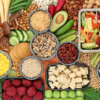
- Fermented foods (yoghurt, kefir, kimchi, sauerkraut, and kombucha) have not only been found to increase gut microbiome diversity, but a study also found they reduced 19 inflammatory markers. As inflammation is a factor often present in the following antibiotics, this is important.
- High-fibre foods help to feed gut bacteria and encourage the production of short-chain fatty acids. Here we can aim for diverse and varied sources of fibre, including whole grains, legumes (beans, lentils), vegetables (especially cruciferous varieties), fruits, and resistant starches found in cooked and cooled potatoes, rice, and oats.
- Polyphenol-rich foods contain colourful pigments that support beneficial bacteria like Bifidobacterium and Lactobacillus while simultaneously promoting anti-inflammatory processes. Top of the list are: berries, dark leafy greens, green tea, and dark chocolate.
- Prebiotic-specific foods go beyond fibre, but contain more specific fermentable fibres. Here we can aim to include and prioritise garlic, onions, leeks, asparagus, Jerusalem artichokes, chicory root, and bananas (slightly green), which contain inulin, fructo-oligosaccharides (FOS), and galacto-oligosaccharides (GOS).
- Omega-3-rich foods can help support a reduction in inflammation and also support the gut barrier, which can be impacted via specific antibiotic mechanisms. These foods include: fatty fish (salmon, mackerel, sardines), walnuts, and flaxseeds.
Foods to Avoid During Gut Recovery
There are many foods that be impact gut health. This can be through their direct action on the gut, but also as consuming them is at the expense of more beneficial foods.
- Ultra-processed foods – often high in additives, artificial sweeteners, and emulsifiers, which can disrupt the gut microbiome balance and inflammation, potentially delaying recovery. They are also more likely to be devoid of the beneficial gut bacteria feeding fibre.
- Excessive sugar and refined carbohydrates – these can be seen in processed foods and lead to the growth of opportunistic or harmful bacteria, delaying and impacting microbiome restoration.
- High-fat diets – often also referred to as processed diets can alter the gut microbiome, possibly due to inflammation, reducing microbial diversity and increasing intestinal permeability, though healthy fats from omega-3 sources should still be included.
- Alcohol consumption – this can contribute to inflammation, gut lining irritation and delay recovering but contributes to microbiome changes.
- Medications – that are not essential may further contribute to gut irritation. For example, the most common and perhaps problematic are non-steroidal anti-inflammatory drugs (NSAIDs). Research indicates these impact gut microbiota composition and metabolic function of the microbiome.
Hydration and Its Role in Gut Health
A too often overlooked aspect of good gut health is hydration.
This helps to:
- Support electrolyte balance.
- Supports the mucosal lining of the intestines, which serves as a critical barrier and habitat for beneficial bacteria.
- Water facilitates the transport of nutrients to gut bacteria.
- Water also helps remove metabolic waste products.
- Support bowel movements and transit time – this helps the overall environment of the gut and good microbial balance.
- Aiming for around 2l of water daily (or more based on individual needs, climate, and activity level) can be considered a good, general approach and aim.
Lifestyle Factors That Promote Gut Healing
While diet and supplements can be a focus, daily lifestyle factors also promote good gut health. These can be prioritised during the anti-biotic recovery period.
- Regular physical activity – shown to increase gut microbiome diversity independently of diet.
- 7-9 hours of quality sleep per night – poor sleep and sleep deprivation are clearly linked to alterations in gut microbiome composition. Increased intestinal permeability and impaired immune function and both also linked to poor sleep.
- Avoid smoking and minimise alcohol consumption – both clearly alter gut microbiota composition and gut lining health.
- Regular mealtimes – the gut microbiome has its own circadian rhythm that responds to feeding patterns.
- Time in nature – environmental exposure to diverse microbes can contribute to gut microbiome diversity.
Managing Stress for Better Gut Health
While dietary fibres and alcohol can be easier to quantify, stress is hard to pinpoint. However, it can still lead to poor gut health.
- Stress increases levels of cortisol via the HPA axis. This can impact gut transit, the health of the gut lining and reduce microbiome diversity. Studies have found stress to be directly inflammatory on the gut.
- Stress alters the functions of the vagus nerve, which helps to regulate gut/brain communication. Interestingly, probiotics have been found to help regulate this pathway.
- Stress promotes dysbiosis. Specifically reducing beneficial Bifidobacterium and Lactobacillus while increasing harmful Proteobacteria.
- Gut-brain support can include yoga, deep breathing practices and meditation that support the parasympathetic arm of the central nervous system.
How Long Does It Take to Rebuild Gut Health?
In the majority of cases, the microbiome returns to near its baseline level of composition within 1-2 months. However, the time it takes for all bacterial species and the metabolic function to return can be much longer.
- One study found that after 6 months, on 37% of patients of participants had only recovered 63% of their beneficial special. Several species (Bifidobacterium, Coprococcus, and Eubacterium) remained undetectable.
- How recovery progresses can be influenced by the type of antibiotics and the duration, as well as baseline microbiome diversity.
- Age also plays a role, with infants and the elderly taking longer to recover.
- Fibre-deprived diets can lead to a slower recovery. One study found that a diet low in fibre took 8 months or longer to fully recover.
- While the microbes may return to normal in some cases within months, the actual metabolic pathways these bacteria support can take up to 1 year.
Conclusion
While there are key strategies to rebuild the gut, having a healthy gut microbiome prior to antibiotic treatment appears to be the most reliable way to make a quicker recovery.
This not only involves a fibre-rich diet but also eating fermented foods, limiting processed foods, as well as managing stress, focusing on good sleep.
While most people who take antibiotics see a recovering with 1-2 months, in certain cases this can take longer. This is where working with a gut health practitioner can help speed up recovery time and improve long-term gut health.
Contact us for your free gut health assessment.
References
- Frontiers in Cellular and Infection Microbiology – Antibiotics as Major Disruptors of Gut Microbiota
- National Center for Biotechnology Information (PMC) – Impact of antibiotics on the human microbiome and consequences for host health
- Nature Reviews Microbiology – Antibiotic perturbations to the gut microbiome
- Cell Reports – Acute and persistent effects of commonly used antibiotics on the gut microbiome and resistome in healthy adults
- National Institutes of Health (NIH) – Probiotics – Health Professional Fact Sheet
- MDPI Nutrients – Probiotic Functions in Fermented Foods: Anti-Viral, Immunomodulatory, and Anti-Cancer Benefits
- Harvard Health Publishing – Fermented foods for better gut health
- MDPI International Journal of Molecular Sciences – Integrative Neuroimmune Role of the Parasympathetic Nervous System, Vagus Nerve and Gut Microbiota in Stress Modulation
- Frontiers in Microbiology – Communication of gut microbiota and brain via immune and neuroendocrine signaling
- PMC – National Center for Biotechnology Information – Probiotics, prebiotics, and postbiotics in health and disease
Last Updated
Published by Martin Cohen on 19/02/2026