The gut lining is an integral barrier that protects the body. It acts as a security barrier that allows nutrients in while keeping potentially harmful substances out.
In certain situations, this lining can become compromised, which alters its ability to regulate the barrier.
This is often described as leaky gut, but also more officially known as increased intestinal permeability.
This has been linked to a range of digestive issues, as well as blood sugar, immune, mood-related as well and others. It can also be over diagnosed and not relevant in all situations.
This article will discuss leaky gut in more depth.
What is Leaky Gut Syndrome?
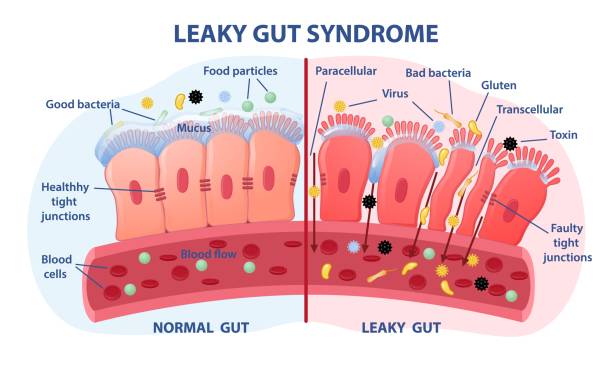
Along the lining of the digestive the cells are joined together by proteins called ‘tight junctions. These provide the binding between the cells, providing strength and helping to regulate the function of the lining.
Leaky gut involves the disruption of these tight junctions, which makes the gut lining far less able to regulate what passes across this barrier.
This means the following may all enter the blood stream and start leading to issues
- harmful bacteria
- undigested food particles
- toxins
Causes of Leaky Gut Syndrome
The causes of leaky gut can range widely, but can also be considered aspects of the environment. Be those foods, medications or related to our response to the stress that is experienced.
Diet
- Dietary patterns, particularly diets high in processed foods, high-fat, and excessive sugar
- Food additives and preservatives
- Alcohol, in particular, binge drinking
- Smoking and vaping
Lifestyle
- Chronic stress
- Lack of physical activity and exercise
Medications:
- Antibiotics (impact the microbiome and gut lining via different mechanisms)
- NSAIDs (e.g. ibuprofen)
- PPI (e.g. omeprazole
Environmental Factors:
- Pesticides
- Microplastics
- Household chemicals
- Water quality
Other Triggers:
- Chronic infections
- Imbalanced gut bacteria (dysbiosis)
- Genetic susceptibility
Symptoms of Leaky Gut Syndrome
It’s common for a wide range of digestive and non-digestive related issues and symptoms to be related back to increased intestinal permeability (aka leaky gut).
The key ones to be aware of are:
Digestive Issues:
- Bloating
- Distention
- Altered bowel patterns (eg diarrhoea or constipation)
- Gas and flatulence
- Pain and cramping
- Food intolerances and sensitivities,
Whole-Body (non-digestive) Symptoms:
- Persistent or chronic fatigue
- Brain fog and cognitive slowness
- Joint inflammation pain
- Skin issues (rosacea, rashes, eczema)
As these symptoms overlap and look similar to many heath conditions, it’s important to get the correct advice for diagnosis and testing.
How Leaky Gut Affects Overall Health
When working correctly, the gut lining regulates what is allowed into the body. It does this in a selective manner to help keep the internal system running correctly.
When this breaks down, a range of processes can take place which contribute to the symptoms seen in leaky gut.
This can include:
- Bacterial toxins enter the bloodstream, causing the immune system to become activated, leading to inflammation
- Inflammatory responses further activate the immune response and deplete antioxidants
- Impacted blood sugar regulation and weight
- Overactivation of the immune response contributes to an increase risk of autoimmunity
- Impacts and reduces levels of beneficial, gut-friendly short-chain fatty acids, which further impact the gut
This can cause an going vicious cycle where the inflammation triggered by leaky gut increases the damage to the gut lining. An effective treatment strategy is required to take both the causes and consequences of leaky gut into consideration.
The Link Between Leaky Gut and Common Conditions
Clear links and associations have been found between leaky gut and a range of common health conditions.
However, it’s still important to remember that the presence of leaky gut doesn’t always mean it has led to the disease starting, as mentioned, it can be a result, not the cause.
That said, a range of common health issues are closely linked to leaky gut. These include:
- Coeliac Disease – Gluten exposure can increase levels of zonulin, the protein that opens up the tight junctions between gut cells.
- IBD – Levels of zonulin (used as a marker for leaky gut) can be elevated in Crohn’s disease and ulcerative colitis, even during remission.
- IBS – leaky gut can be seen in those with IBS, however, this is less common than in IBD.
- Liver Disease – a strong connection between the gut and liver is referred to as the ‘gut-liver axis’. A key aspect here is NAFLD (non-alcoholic fatty liver disease) and how over 50% of those with cirrhosis have raised markers of intestinal permeability.
- Type 1 Diabetes – due to the gut’s role in immunity and autoimmunity, leaky gut can be a precursor to type 1 diabetes.
- Type 2 Diabetes – while leaky gut can impact blood sugar control, elevates blood sugar further impacting leakiness, interferes with insulin and can contribute to disease progression.
- Heart Disease – studies have found toxins from bacteria in the arteries of those with heart disease. This has been linked to chronic inflammation and worsening cardiovascular health outcomes.
- Autoimmune Conditions – proteins that leak into the bloodstream can trigger the immune response. A factor here is called ‘molecular mimicry,’ where certain food proteins can resemble body tissue. For example, gluten can have a similar structure to joint tissue. This means that while the immune system is attacking the gluten in the bloodstream, the joint tissue also gets targeted by mistake. In this case, it may contribute to rheumatoid arthritis.
- Brain Health – deterioration in the gut microbiome and the gut barrier can predate the onset of Parkinson’s symptoms. Disruptions to the gut-brain axis can also be linked to autism, depression and Alzheimer’s.
How is Leaky Gut Syndrome Diagnosed?
Despite what may be found online, there is not a single test that officially diagnoses leaky gut. However, certain tests have been reported to offer insight.
Here is an overview of what they are:
Sugar Tests (Most Common):
- This involves drinking a solution that contains lactulose and mannitol) and then collecting periodic urine samples. Due to the difference in size of these sugars, if leaky gut is present, then a specific ratio of these should be seen in the urine.
Zonulin Blood and Stool Tests:
- Measuring zonulin in blood and stool has mixed research, and if often summarised as being inaccurate.
Advanced Methods:
- Ussing chamber testing is often considered the gold standard. However, this requires a biopsy of the gut cells, which is impractical. Even more so, since most cases of leaky gut are hypothesised to be within the small intestine, a very challenging place to get to.
Even with or without a clear diagnosis of leaky gut from a test, it’s important to work to address the underlying issue. For example, while leaky gut may or may not be present, what is causing the whole range of issues is the most important part of the treatment strategy.
Treatment Options for Leaky Gut Syndrome
Leaky gut treatment may need to be direct and indirect. This means direct treatments focusing on supporting the gut lining, while indirect treatments focus on what is damaging the gut lining.
Medical Treatments:
- Depending on the diagnosis, these indirect treatments focus further upstream and target what may be leading to intestinal permeability.
- For example, IBD medications can reduce inflammation, while coeliac disease requires strict gluten avoidance.
Probiotics:
A range of specific strains of probiotics have been found to improve barrier function.
These include
- Lactobacillus strains (L. rhamnosus GG, L. plantarum)
- Bifidobacterium strains (B. infantis, B. bifidum)
- Faecalibacterium prausnitzii
Some studies have also found that multi-strain probiotic formulas may work best.
Prebiotics:
- Prebiotics can be as, or more helpful than probiotics due to their role in helping the gut produce gut-strengthening short-chain fatty acids.
- Key prebiotics include: inulin, acacia fibre, PHGG, and GOS.
Mucosal Support
Formulas aimed at providing the gut lining with more of the beneficial raw material to support cellular repair.
- Glutamine
- Butyric acid
- Colostrum
- Zinc
- Proline
Further Supplements:
These can include
- Omega-3 fatty acids (reduce inflammation)
- Vitamin D (supports immune function)
- Quercetin (reduces histamine levels)
Lifestyle and Dietary Changes to Heal Leaky Gut
While specific treatment may be helpful, foundational dietary and lifestyle elements are essential for effective treatment outcomes.
Foods to avoid
- Limiting highly processed foods, alcohol, known sensitivities and highly fried foods.
Food to focus on
- A high fibre, colour diverse plant plant-rich diet
- Fermented foods ((yogurt, kefir, sauerkraut, kimchi),
- Fatty fish (salmon, mackeral, sardines)
- Healthy fats – olive oil, flaxseed oil, bone broth
- Good quality protein – including organ meals and offal
- Bone broth
Special Diets:
- Eliminations duet such as low FODMAP or AIP (autoimmune paleo) can help identify food triggers.
Lifestyle:
- Moderate exercise (strengthens barrier; avoid extreme intensity)
- Stress management (meditation, yoga, deep breathing)
- Adequate sleep (7-9 hours),
Practical Dietary Tips:
- Space meals 4-5 jours apart
- Eat in a relaxed state
- Eat slowly and chew each mouthful thoroughly
What You Need to Know About Leaky Gut
As discussed, the gut lining is a critical barrier that protects the entire body.
We know it plays a definite role in celiac disease, and there’s strong evidence linking it to IBD, liver disease, and metabolic conditions. The hard part is not only using testing in the best way possible to diagnose it, but tracing the situation far enough upstream to understand the cause.
The good news is that daily habits, such as diet, stress management and overall lifestyle, all make a huge difference in the health of the gut barrier. Into this foundational picture, specific treatments can be used to help address the cause.
Contact us for your free assessment today.
References
- Internal and Emergency Medicine – Gut microbiota, intestinal permeability, and systemic inflammation: a narrative review
- Frontiers in Nutrition – The Role of Intestinal Permeability in Gastrointestinal Disorders and Current Methods of Evaluation
- National Institutes of Health (NIH) – Intestinal Permeability and Its Regulation by Zonulin
- American Journal of Gastroenterology – Intestinal Fatty Acid-Binding Protein as a Marker of Intestinal Barrier Dysfunction
- Gut Journal (BMJ) – Celiac Disease and Intestinal Barrier Function: The Role of Zonulin
- Nature Reviews Gastroenterology & Hepatology – Gut-Liver Axis: Pathophysiology and Clinical Implications
Last Updated
Uploaded by Martin Cohen on 24/01/2026