


Irritable Bowel Syndrome (IBS) Diagnosis
Learn how IBS is diagnosed, the tests involved, and what to do if results are normal.
Written by Martin Cohen, Dip CNM, mBANT, mCNHC, Registered Nutritional Therapist.
Reviewed October 2026 · Next review due October 2027.

A GP will usually diagnose IBS based on your symptoms, once tests have ruled out other conditions. While there isn’t a single test for IBS, normal test results don’t mean your symptoms aren’t real, just that another cause hasn’t been found. This page covers the diagnostic process for IBS and which further tests may be helpful.
Any change in digestive health can warrant a conversation with a healthcare professional. However, some symptoms are considered red flags. These may mean you should seek medical attention promptly, and include:
- Unexplained weight loss
- Blood in stools
- Anaemia
- Fever
- A change in bowel habit lasting more than about 6 weeks, especially if you’re over 50
How is IBS diagnosed?
To diagnose IBS, a GP will ask about your symptoms and may order some tests. These usually include blood tests and a stool test, and if symptoms indicate, a colonoscopy also. If the tests come back clear and your symptoms meet the diagnostic criteria for IBS (The Rome IV criteria), a diagnosis of IBS will usually be made.
Due to this, IBS is described as a “diagnosis of exclusion”, meaning it’s diagnosed once other conditions have been ruled out.

What are the Rome IV criteria for IBS?
The Rome IV criteria state that IBS can be diagnosed when recurrent tummy (abdominal) pain has been present on average at least 1 day a week in the last 3 months, along with two or more of the following:
Going to the loo
Symptoms associated with going to the toilet to poo.
A change in how often you go
IBS symptoms are related to how often a stool (poo) is passed.
A change in what you poo looks like
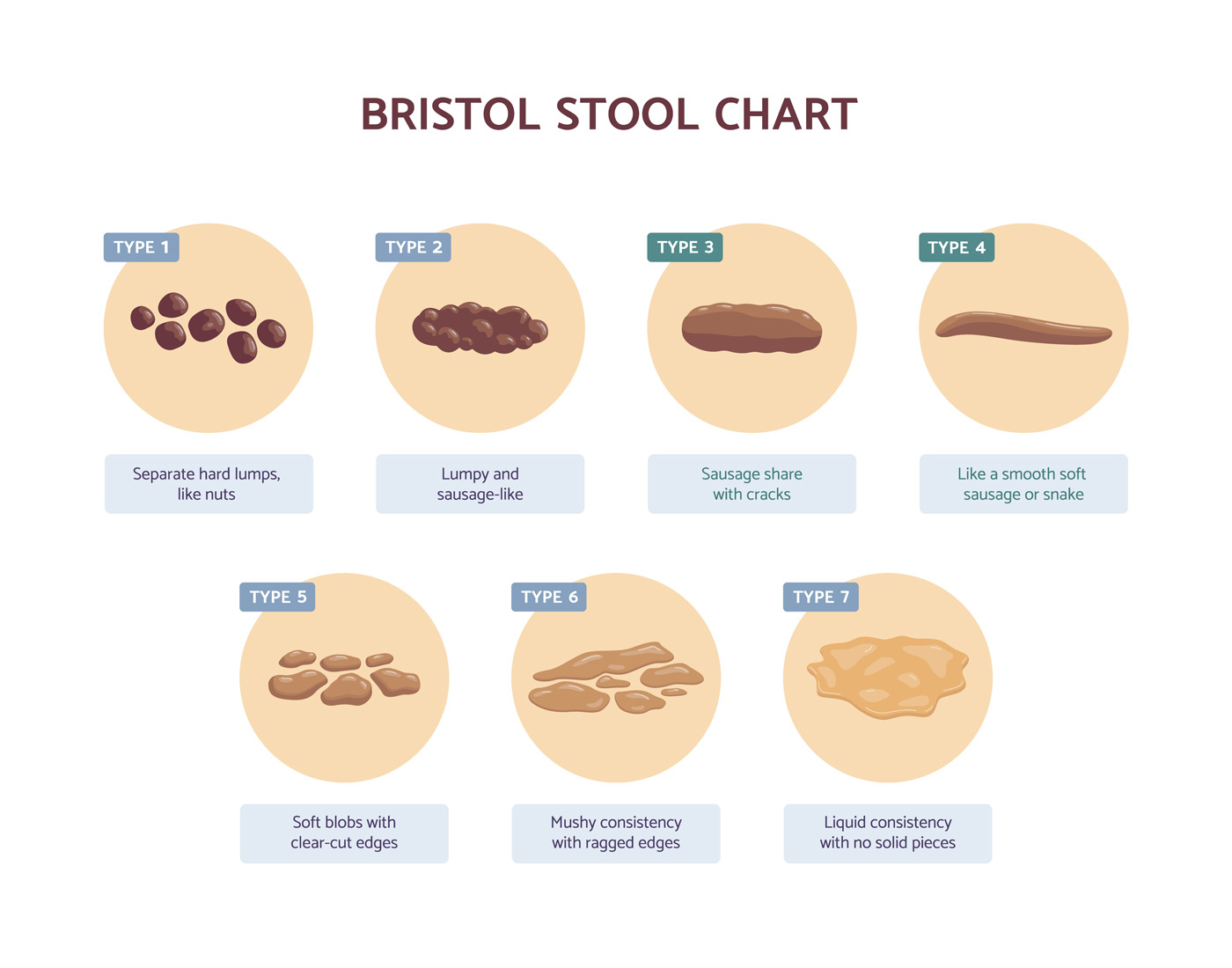
IBS symptoms are seen with the stool being looser or firmer based on the Bristol stool chart.
How long you’ve had symptoms as well as how frequently they occur are also taken into consideration during diagnosis. As are the NICE guidelines along with the ROME criteria.
If IBS symptoms started following a case of food poisoning or gastroenteritis, it can be common for a diagnosis of Post-infectious IBS (PI-IBS) to be given.
What will my GP look at first?
A GP will take into consideration test results as well as personal and family medical history. There may also be a physical assessment by feeling the tummy and abdominal region.
When assessing IBS symptoms gathering information about health history is important. This can provide information about factors such as medication usage, stressful life events and cases of food poisoning. All of these factors provide details on the underlying causes of IBS symptoms and help to guide treatment.
Along with external examinations internal examinations such as assessing for haemorrhoids can be carried out by a GP or via a colonoscopy or sigmoidoscopy by a gastroenterologist.
Clinic note: In the majority of our patients, these examinations have already been carried out where needed, prior to their first appointment.
Speak to us about your gut health today
What tests might my GP do?
Certain blood tests can be used to test digestive conditions. This is an important part of the process of the diagnosis of IBS.
Blood tests that can be considered include:
- Coeliac disease
- CRP
- Anaemia
Stool tests can also be used to assess for:
- Faecal calprotectin which helps to separate IBS from IBD
- Pancreatic elastase
- Infections
If symptoms indicate, you may be given a referral for a colonoscopy.
What if my tests are normal but my symptoms continue?
Clear tests result rule out the diseases such as bowel cancer and inflammatory bowel disease. But, simply because these tests don’t reveal anything, this doesn’t mean that nothing is going on. From here, support is available and it often outside of the NHS.
Our intake and assessment process examines your symptoms and health history – this is to identify risk factors that can guide treatment, dietary approaches, testing and gut-brain support.
Do I need private gut tests?
Further testing is not always needed. However, if it may provide clinically helpful for your case, testing can be considered.
These tests include:
- SIBO breath test
- Microbiome analysis
- Food allergy and sensitivity assessments
Note from the clinic: It’s important to be aware that these tests may provide certain clues, rather than always the exact cause.
The information your practitioner gathers about your symptoms, triggering events and diet can often be more helpful that doing lots more tests. Your practitioner will guide you through this process.
SIBO breath test
- To assess levels of hydrogen and methane in the breath. It’s important to note that this test is not 100% reliable but can guide antimicrobial and antibiotic treatment. In some cases, if SIBO is suspected, treating based on symptoms (empirical treatment) can be a more effective approach.
Microbiome analysis
- To examine the balance of bacteria in the gut as well as levels of inflammation and digestive enzyme production. Imbalances are common in these tests and it’s important that these results be reviewed with this understanding that the fact that imbalances are present, doesn’t mean they’re the cause. Your practitioner with guide you through these results.
Food allergy and sensitivity assessments
- Various food reactivity blood tests are available which include IgA, IgE and IgG tests, all of which assess a different part of the immune response. As with the other tests, ordering the considering the right test at the appropriate time in the assessment and treatment process.


Your Next Step
Get help for your IBS
Book a free 15-minute consultation where we’ll review your symptoms and answer any questions.
Read more about IBS treatment
Learn about the approaches and treatments that can be considered to address IBS.
Read moreFrequently Asked Questions
What’s the difference between the tests for IBS and IBD?
The initial tests for IBS and IBD can be the same, but the results can indicate further testing or treatment. For example, a faecal calprotectin test (measuring inflammation) is used in both IBS and IBD, but the level of inflammation found can differentiate between these conditions and the possible next step of a colonoscopy.
Can I still have IBS if my colonoscopy was normal?
Yes, a normal colonoscopy is the most common result of this procedure in those with IBS. In IBS the bowel wall often looks completely normal and free of damage or inflammation. While inflammation can still be common in IBS, it is happening at a microscopic level.
Do I need a colonoscopy to be diagnosed with IBS?
Not everyone needs a colonoscopy to be diagnosed with IBS. If needed, based on your symptoms, a doctor may suggest a colonoscopy to rule out certain diseases. These would be symptoms that would indicate inflammatory bowel disease or bowel cancer and include blood and mucus in the stool, an abdominal mass or rapid unexplained weight loss.
Is there a test for IBS?
No, there is no single test for IBS. Instead there are tests to rule out conditions such as cancer and inflammatory bowel disease. Once these are excluded, other tests can be considered to examine areas of the gut (eg the gut microbiome) that may contribute to IBS symptoms.
Can I diagnose IBS myself?
No, IBS is diagnosed by a doctor. This diagnosis takes place after a thorough assessment process. While it might be tempting to give yourself this diagnosis, if you’re experiencing symptoms, it is best to speak to a professional.